What the City of Acworth Won't Collect - and What to Do About It
The city's curbside service is for household trash, and its ordinance draws the line firmly. Knowing exactly where that line falls tells you when you need a container.
In this guide
- What curbside actually covers
- The construction and bulky-item line
- Tires, batteries and the ordinance
- Contractor waste is your responsibility
- Where a dumpster fits
- What still doesn't go in the container
- Planning around it
People are often surprised, mid-project, to discover what their city trash service will not take. In Acworth the rules are set out in the city's sanitation ordinance - and knowing them in advance tells you exactly when a roll-off is the answer.
What curbside actually covers
City of Acworth sanitation is a household-waste service. It handles the normal weekly output of a home - kitchen and general household trash in the provided receptacle. That is what it is designed for and funded for.
The moment your waste stops looking like a normal week's trash, you are outside what curbside covers. And a renovation, a big clear-out or a serious landscaping job crosses that line immediately.
The construction and bulky-item line
The city's ordinance is explicit. The city solid-waste collection service will not pick up items such as tires, batteries, construction debris and large bulky items.
So the debris from a bathroom remodel, a torn-out deck, a re-floored living room, an old sofa and a dead appliance - none of it is going out with the household trash. This is not the city being unhelpful; it is simply not what curbside collection is for, and the volumes and weights involved need different handling.
Tires, batteries and the ordinance
The specific exclusions matter because they trip people up. Tires and batteries are named in the ordinance as items the city will not collect - and they should never go in a dumpster either. Both have their own disposal routes through Cobb County's recycling and hazardous-waste handling.
Construction debris and large bulky items - furniture, appliances, the big awkward things - are the other named exclusions, and those are exactly what a roll-off is for. Knowing the ordinance draws this line means you can plan for it rather than discover it when the truck drives past your pile.
Contractor waste is your responsibility
One point catches people out generally across the area. If you hire a company to do landscaping, tree work or renovation, that company is responsible for removing its own debris - the city will not collect a pile a contractor leaves at your curb.
So if a landscaper or contractor leaves debris behind, that pile is your problem. This is worth knowing before you hire, and worth writing into the arrangement: either the contractor hauls their own debris, or you have a container on site for it.
Where a dumpster fits
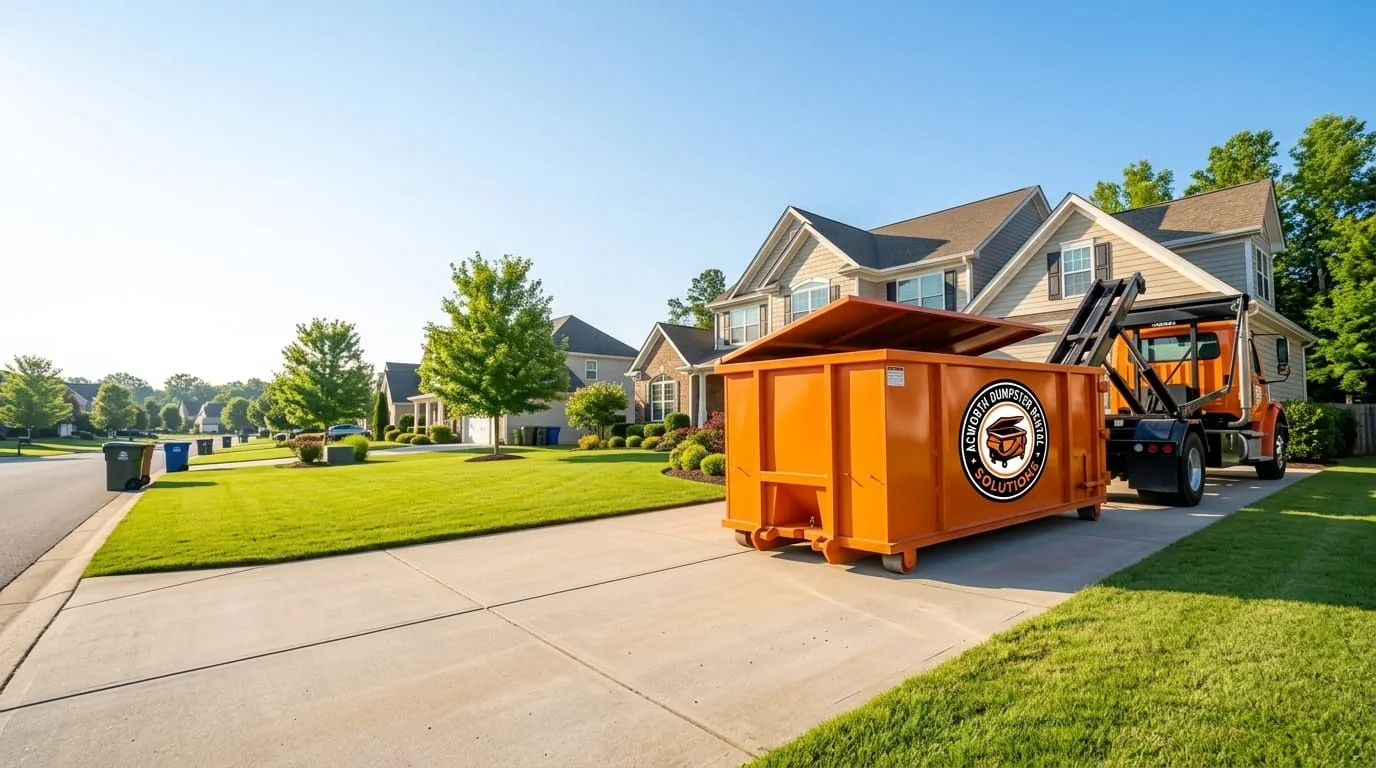
This gap is the entire reason residential dumpster rental exists. A roll-off takes exactly what curbside will not: the construction and renovation debris, the old furniture and appliances, the torn-out decking and fencing, and the bulky items the ordinance excludes.
You get a container sized to the job, you fill it on your own schedule over the rental period, and it goes away in one collection - to the Cobb transfer station at the in-county rate, since we are Acworth-based. One flat price, and none of the material was ever the city's to refuse.
What still doesn't go in the container
A roll-off takes most of what the city will not, but not everything. Some materials need dedicated routes regardless.
Tires, batteries, paint, solvents, fuel, oil and chemicals are household hazardous waste and go to Cobb County's recycling and hazardous-waste routes, not in the container. Clean yard and vegetative debris has its own route through TAG Grinding Services.
Appliances with refrigerant - fridges, freezers, air conditioners - need the refrigerant professionally recovered before disposal. Tell us if you have any and we will point you to the right handling. Everything else from the typical project goes in the box.
Planning around it
The practical takeaway is simple. Before you start a project, think about what it will produce and whether it is inside or outside what the city collects. If it is a normal week's trash, curbside has it. If it is renovation debris, bulky items, tires, batteries or contractor waste, you need a container - and it is cheaper and easier to have that arranged before the pile appears than to scramble once it has.
Call and describe the project. We will tell you the size, the flat rate, and what to keep aside for the county's separate routes.
Book a container in Acworth
One flat rate covering delivery, seven days, pickup and disposal.
(470) 888-7506Questions readers ask about this
Will the City of Acworth collect my renovation debris?
No. The city sanitation ordinance excludes construction debris, tires, batteries and large bulky items - it only handles normal household trash. A roll-off container is what handles renovation and demolition debris.
Can I put tires or batteries in the dumpster?
No. Tires and batteries are excluded from both city collection and the dumpster - they go to Cobb County's recycling and hazardous-waste routes. We will point you to the right handling for them.
What if my contractor leaves debris at the curb?
The city will not collect it - hired-company waste is the property owner's responsibility. Make sure the contractor hauls their own debris, or have a container on site for it.
What can't go in the dumpster either?
Tires, batteries, paint, chemicals, fuel and oil go to the county's hazardous-waste routes, and appliances with refrigerant need it professionally recovered first. Everything else from a typical project goes in the container.